


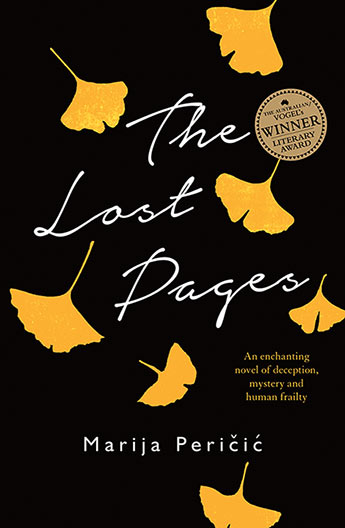
 The Lost Pages
by Marija Peričić
Allen & Unwin
Franz Kafka has been referred to as the most important person in German literature but his short story The Metamorphosis was one of the few pieces of writing published in his lifetime. Dying of tuberculosis in 1924, he gave instructions to his literary executor Max Brod to destroy all his work. Fortunately Brod ignored the instructions and published the stories that were to leave a lasting mark on the world of literature.

Kafka met novelist and musician Max Brod, who was a year younger, after a talk that Brod gave at the university on Arthur Schopenhauer. Working at a post office and writing in his spare time, Brod was not to make a lasting mark on the literary world but was responsible for posthumously publishing Kafka’s The Trial, The Castle and Amerika.
This is all essential preamble to the highly speculative novel by Marija Peričić which takes place in 1908 Prague. It is a mystery which, not unlike a Kafka story, fuses realism with the surreal. So the writers are both real, with Brod having a crippling physical disability. Their meeting is based on fact and so is their friendship including Brod being Kafka’s literary executor.
The Lost Papers purports to be a journal written by Brod, detailing his paranoia and his anxieties when dreams and reality become intermixed. I was fully immersed in the fictional papers that even include footnotes where notes have been written in the margins of the journal, pages are missing, writing is illegible or paragraphs are added at a later date.
The story is a huge intrigue as, from Brod’s point of view at least, a literary rivalry seems to be developing between the two men. Behind the friendship, the jealous Brod is scheming, deceiving and trying to sabotage Kafka. Brod draws the reader into his descent into madness and the intrigue is maintained until the very end.
Lezly Herbert
Support OUTinPerth
Thanks for reading OUTinPerth. We can only create LGBTIQA+ focused media with your help.
If you can help support our work, please consider assisting us through a one-off contribution to our GoFundMe campaign, or a regular contribution through our Patreon appeal.