

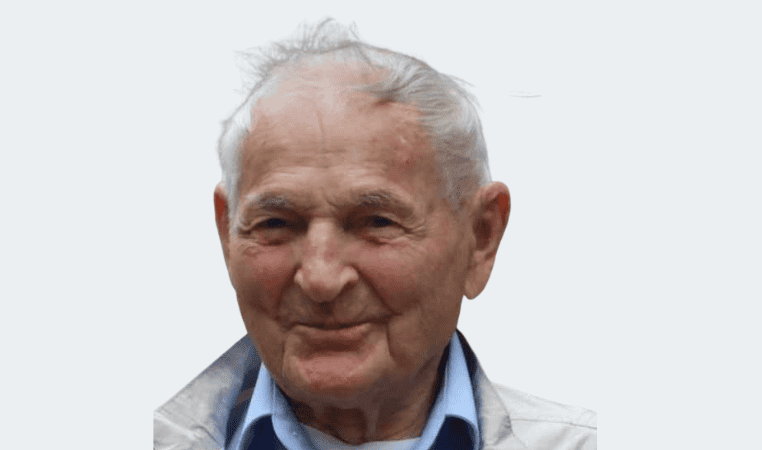
When Rudolph Brazda passed away on this day in 2011, he was believed to be the last known concentration camp survivor who had been deported and imprisoned by Nazi Germany under laws criminalising homosexuality.
Born in 1913 in Brossen, now part of Germany, Brazda became a Czechoslovak citizen following World War I. During the final years of the Weimar Republic, he lived a happy life with his partner, Werner, whom he met in 1933. However, after the Nazi Party came to power, the regime began systematically persecuting people for their sexual orientation.

In 1937, following investigations involving some of his friends, Brazda was taken into custody and sentenced to six months in prison. Werner, who was undertaking military service, is believed to have died in 1940 while serving on the French front.
After his release, Brazda was required to leave Germany and moved to a northern province of Czechoslovakia. The region had been annexed by Germany a year earlier and, in April 1941, he was arrested for a second time. After serving another prison sentence, he was deported to the Buchenwald concentration camp in 1942.
Assigned prisoner number 7952, Brazda remained at Buchenwald until the camp was liberated in 1945. Like many prisoners targeted for their homosexuality, he was forced by the Nazi regime to wear a pink triangle on his clothing.
After gaining his freedom, Brazda moved to France, following many of the French friends he had met while in the concentration camp. In the early 1950s, he met Edouard “Edi” Mayer, who became his lifelong companion. When Edi was injured in a workplace accident, Brazda cared for him for more than 30 years until his death in 2003.
In 2008, after hearing about the unveiling of the Memorial to Homosexuals Persecuted Under Nazism in Berlin, Brazda decided to share his story publicly. Although he was unable to attend the memorial’s launch in May, he was honoured the following month during the city’s annual Christopher Street Day Pride parade.
He went on to speak at numerous events commemorating those lost during the Holocaust. In recognition of this work, he was appointed a Knight of the Legion of Honour in 2011.
Brazda died on 3 August 2011 at the age of 98, leaving behind an enduring legacy as a witness to one of history’s darkest chapters and as a survivor of the Nazi persecution of LGBTQIA+ people.