


Pansexual and Panromantic Visibility Day is a moment to focus on this part of our diverse community and better understand their experiences and needs.
Pansexuality can be described as attraction to people of any gender, or as attraction where gender has no bearing on who someone is drawn to or falls in love with.


Pansexuality sits under the broader umbrella of bisexuality or bi+, with bisexual generally meaning attraction to more than one gender. The two terms co-exist, and many people use both labels to describe themselves.
Some of the most visible people who have publicly identified as pansexual include Miley Cyrus, Arrested Development and Avatar: The Last Airbender star Mae Whitman, British musician Yungblud, and Janelle Monáe.
Pansexuality is becoming a much more commonly used identifier among young LGBTQIA+ Australians. La Trobe University’s Writing Themselves In 4 report found that 11.2% of young LGBTQIA+ Australians identified with the term, compared with lesbian at 12%, bisexual at 33.8%, queer at 8.4% and gay at 16.6%.
The report also found that pansexual respondents were the least likely to feel supported by classmates at school. Pansexual people were largely invisible across all levels of education, with four-fifths of respondents noting that pansexual identities were never mentioned in an inclusive way.
Pansexual young people, along with gay and queer identifying participants, also reported higher levels of harassment than other LGBTQIA+ respondents and experienced poorer mental health outcomes than many of their peers.
Young pansexual and panromantic respondents shared factors that supported their mental health and wellbeing, including affirmation from others and within themselves, forming romantic connections, connection with friends and family, and achieving goals or making a positive difference in the world.
Here in WA, pan folks can get involved with Bi+ Community Perth to connect, find events and celebrate with community.
The film ‘Anders als die Andern’ had its premiere in 1919
Anders als die Andern is a silent German melodramatic film produced during the Weimar Republic. It premiered on this day in 1919. The title translates as Different from the Others.
The film was directed by Richard Oswald, with the story developed by Oswald and Magnus Hirschfeld. Production was funded by Hirschfeld’s Institute for Sexual Science. The film is recognised as one of the first feature films to present a sympathetic portrayal of homosexuality.
At the time, homosexuality was illegal in Germany. In response to this film and others like it, the government introduced stricter censorship laws. From the following year, only doctors and other medical professionals were permitted to view the film. Prints of the film were later burned by the Nazi regime after it came to power in 1933.
Actor Conrad Veidt portrays Paul Körner, a successful violinist who falls in love with one of his male students. An extortionist threatens to expose Körner as a homosexual. Through flashbacks, the film shows how Körner became aware of his sexual orientation and initially attempted to change it before coming to understand and accept it.
Körner and the extortionist ultimately face each other in court, where the judge expresses sympathy for the violinist. However, once the scandal becomes public, Körner’s career is destroyed and he is driven to suicide.
The film continues to be screened at LGBTIQA+ film festivals around the world.
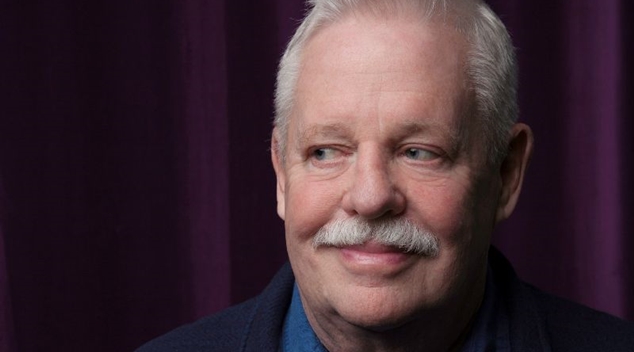
Tales of the City began in serialised form in the San Francisco Chronicle on this day in 1976
Armistead Maupin’s story of bohemian life in San Francisco began on this day in 1976. Tales of the City began as a serialised story in the San Francisco Chronicle.
The story begins with an off assortment of residents of Barnaby Lane. The collection was published as a novel two years later and to date Maupin has written 10 books in the series. The subsequent books follow different characters throughout their lives. The series was a rare positive depiction of LGBTIQA+ characters, and also mirrored challenges faced by the community including the arrival of the AIDS crisis and transgender rights.
After Tales of the City came More Tales of the City (1980), Further Tales of the City (1982), Babycakes (1984), Significant Others (1987), Sure of You (1989), Michael Tolliver Lives (2007), Mary Ann in Autumn (2010), The Days of Anna Madrigal (2014), and Mona of the Manor (2024).
The series has also been adapted for the screen as a television series, turned into a radio play, and been transformed into a musical. Maupin chatted to OUTinPerth back in 2007 and spoke about how the characters in his books all have little parts of his own personality.
In 1988 the United Kingdom introduced Section 28 into the Local Government Act
In 1988, the Thatcher government in the United Kingdom introduced legislation intended to prevent the so-called promotion of homosexuality. It was one of the most controversial and widely criticised laws in modern British history. Decades later, future prime minister David Cameron apologised for the legislation ever being adopted.
The additional provisions added to the Local Government Act stated that local government authorities “shall not intentionally promote homosexuality or publish material with the intention of promoting homosexuality,” or “promote the teaching in any maintained school of the acceptability of homosexuality as a pretended family relationship”.
The legislation was largely focused on education, restricting the availability of books that depicted LGBTIQA+ people and prohibiting the promotion of LGBTIQA+ related events by local government authorities. Despite widespread protests, the laws were introduced in 1988.
Many prominent figures campaigned against the legislation, including Sir Ian McKellen, Michael Cashman, Mo Mowlam, Annette Crosbie, Jane Horrocks, Helen Mirren, and Alan Moore. Boy George wrote the song No Clause 28 to highlight opposition to the law.
In 2000, the first attempt to repeal the legislation was introduced in the House of Commons, but it failed to gain sufficient support in the House of Lords. A campaign against repeal was led by Baroness Young, then Shadow Education Secretary. However, the law was repealed in Scotland, which by that time had its own devolved parliament.
A second push to repeal the legislation came in 2003 and was approved by the House of Commons in February of that year. When the bill was debated in the House of Lords, it was successfully passed.
Baroness Young died in 2002. Following her death, gay rights activist Peter Tatchell stated that Baroness Young had “poisoned society with prejudice and intolerance” and that “future historians will rank her alongside the defenders of apartheid. She supported homophobic discrimination to the last.”
The legislation received Royal Assent in September 2003, ending 15 years of institutional discrimination against LGBTI people and their families. However, its impact has been long-lasting. A 2015 report into bullying in British schools found that a significant proportion of teachers still believed they were not permitted to discuss LGBTIQ+ related issues in the classroom.
In 2009, Conservative Party leader David Cameron issued a formal apology for the introduction of the legislation, stating that it had been a mistake and offensive to gay people. Earlier in his career, Cameron had been a vocal supporter of the law.