


On September 8, 1975, US airman and Vietnam veteran Leonard Matlovich became the first serving member of the US military to publicly disclose that he was gay. He also became the first openly gay person to appear on the cover of a major weekly news magazine in the United States.
The groundbreaking issue of TIME magazine featured Matlovich as a serving member of the US armed forces who was openly declaring that he was gay. The coverage made him one of the best-known gay Americans of the era and brought national attention to discrimination against LGBTQ+ people in the military.

Matlovich worked in the Air Force teaching incoming service members that racism was unacceptable within the armed forces. Through this work, he began to see strong parallels between racism and discrimination against gay people.
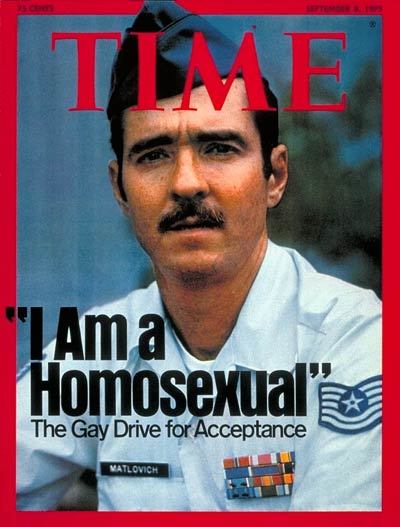
Matlovich officially informed his superiors of his sexuality in an effort to create a legal test case challenging discrimination within the military. He was subsequently honourably discharged from service.
Commenting on his discharge, Matlovich said, “Maybe not in my lifetime, but we are going to win in the end.”
More than three decades later, major military policies restricting service by openly gay personnel were repealed.
He went on to volunteer in numerous gay rights campaigns and, following his HIV diagnosis, became a vocal advocate for people living with HIV.
Matlovich died in March 1988 at the age of 45. He was buried at Congressional Cemetery, and his tombstone bears the famous inscription:
“When I was in the military, they gave me a medal for killing two men and a discharge for loving one.”
It is perhaps unsurprising that Matlovich chose a military career. He grew up on US military bases around the world, including in Georgia, Texas, Guam, Pennsylvania, Alaska, South Carolina, and for a period in the United Kingdom.
He joined the Air Force in 1963 and was first deployed to Vietnam in 1965. During his initial tour, he worked as a radar specialist and also served in Thailand and the Philippines.
After briefly leaving the military, he re-enlisted and returned for a second tour in Vietnam, where he was stationed in Da Nang.
During this period, he left the Catholic faith and converted to Mormonism. Two weeks before he was due to return to the United States, he was injured by a landmine and spent several months recovering in hospital.
Following his recovery in 1970, he transferred to the Air Force’s cartography unit. He later completed a third tour in Vietnam, this time away from the front lines. He was also awarded the Purple Heart for injuries sustained during his earlier service.
Upon returning to the United States, he trained as a military counsellor responsible for improving race relations. Matlovich developed an ambitious programme to tackle racism, inspired by the work of diversity educator Jane Elliott.
The programme prompted Matlovich to reflect on both racial prejudice and his own concealed sexuality. He gradually began visiting gay bars and meeting other gay and lesbian people. He also connected with activist Frank Kameny, founder of the Washington branch of the gay rights organisation the Mattachine Society.
Kameny and the organisation were seeking a legal test case to challenge the government’s ban on gay people serving in the military. They wanted a service member with an exemplary record who could demonstrate that sexual orientation had no impact on professional performance.
On March 6, 1975, Matlovich delivered a letter to his superior stating that he was gay.
The Air Force’s response was to assign him responsibility for a barracks housing young men. Matlovich later suspected he was being set up. His concerns increased when he was asked to accompany the First Sergeant on an inspection while the men were off duty. Awoken from sleep, many of the men were in their underwear or unclothed, and Matlovich believed the situation was intended to test his reactions and potentially gather evidence against him.
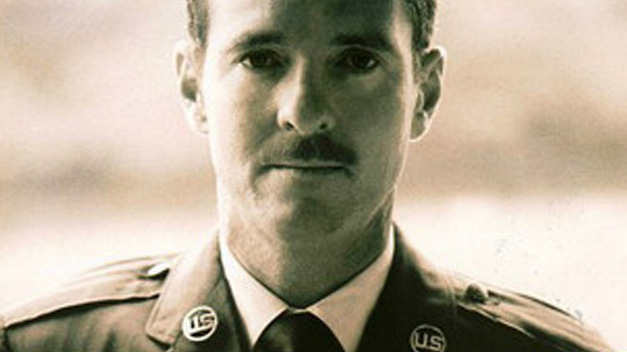
Matlovich and his activist friends had hoped the military make use of a clause in the military rule book that would have allowed him to continue serving, and that they would then use it as a test case to advocate for other gay personnel. The air force took a different approach – they told him he was going to be discharged.
Changing tack, Matlovich agreed to an interview with the New York Times, anticipating it would be a small article and of little interest. When it was published on 26th May, it was a front-page story. Suddenly every newspaper in America wanted to talk to him.
Find out more about Leonard Matlovich at his official website and track down a copy of Mike Hippler’s 1989 book Matlovich: The Good Soldier.
OIP Staff