

In 2015, despite heavy rain, thousands turned out to support marriage equality
On this day in 2015 Perth saw one of the biggest ever political rallies for LGBTIQ+ rights when the Love is Love rally was held in Russell Square, Northbridge.
One broadcaster estimated that more than 10,000 people turned up to demand the Abbott government take action on marriage equality, and allow same-sex couples to wed. Historic changes had already taken place in the United Kingdom, Ireland and the United States.

The rally, organised by GetUp!, drew a massive crowd despite gloomy weather and attendees stood listening to speeches from community members, advocates, and politicians, as the rain poured down.
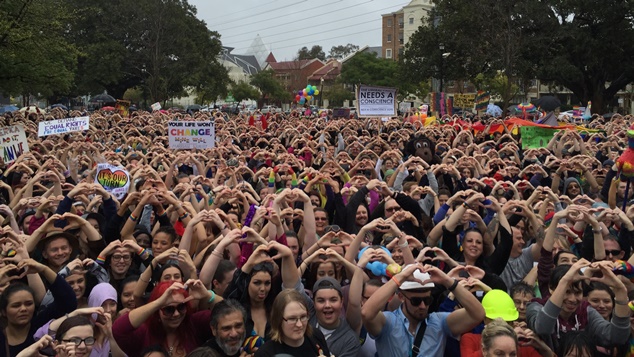
The event had originally been scheduled to take place in the Northbridge Piazza, but as the number of RSVPs swelled, organisers moved the event down the block to Russell Square with the speakers delivering their personal stories from the rotunda.
Watch videos of all the speeches from the rally.
Taking to the stage were Ingrid Cumming, Sally Rugg, Alannah MacTiernan, Rachel Siewert, Samantha Davies and the Reverend Peter Emmanuel, Brian Greig, Ivan Hinton-Teoh, Joey Cookman McCauley and Steph Hastings.

Despite the massive turnout at the event it would be another two and a half years before the government changed the laws.
On the morning of the rally Deputy Prime Minister Barnaby Joyce delivered a message to the LGBTIQ+ communities saying, “Everybody doesn’t get everything they want.”
The Nationals leader who was against changing the laws said allowing same sex couple to wed would be like making “a diamond a square” and would be viewed by our Asian trading partners as “decadent”.
Bushranger Captain Moonlite was born on this day in 1842
Was Captain Moonlite Australia’s gay bushranger? Some historians argue there is strong evidence to support this view.
Andrew George Scott was born in Ireland on this day in 1842. The son of an Anglican clergyman, he trained as an engineer in London. In 1861, when he was 19, his family moved to New Zealand.
He served in the New Zealand military during the Māori Wars and was wounded in both legs. After a long convalescence, he was accused of malingering and court-martialled. He later moved to Australia and began training as a clergyman. He was sent to the gold-mining town of Mount Egerton, but instead turned to crime, robbing a bank and leaving letters signed “Captain Midnite.”
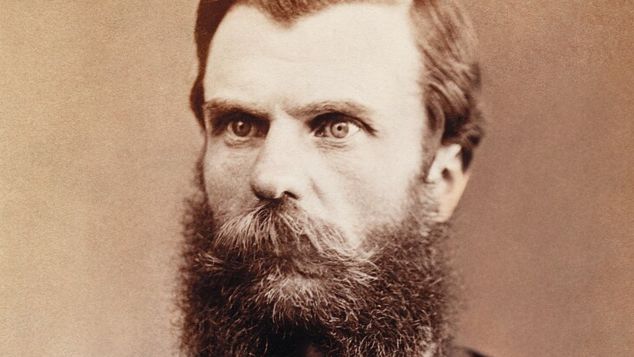
After spending time in prison, he continued a career as a bushranger.
During a later prison sentence, he met a young man named James Nesbitt. Handwritten letters from Scott to Nesbitt are overtly romantic, and some historians have suggested their relationship may also have been sexual.
Captain Moonlite’s gang robbed across Victoria and New South Wales, but their activities came to an end in 1879 during a shootout with police. Nesbitt was shot and killed, and Scott was captured.
Scott was sentenced to death and hanged at Darlinghurst Jail on 20 January 1880. He wrote a series of death cell letters expressing his love for Nesbitt and went to the gallows wearing a ring woven from a lock of Nesbitt’s hair.
Prior to his execution, he asked for his body to be buried alongside Nesbitt. This request was denied by prison authorities.
In 1995, his remains were exhumed from Rookwood Cemetery and reinterred in Gundagai next to Nesbitt’s grave.
In 2020 author Gary Linnell published a book about Scott’s life. Listen to our interview with Gary Linnell.
OIP Staff, images: Graeme Watson. This post was first published in 2021 and has been updated.