

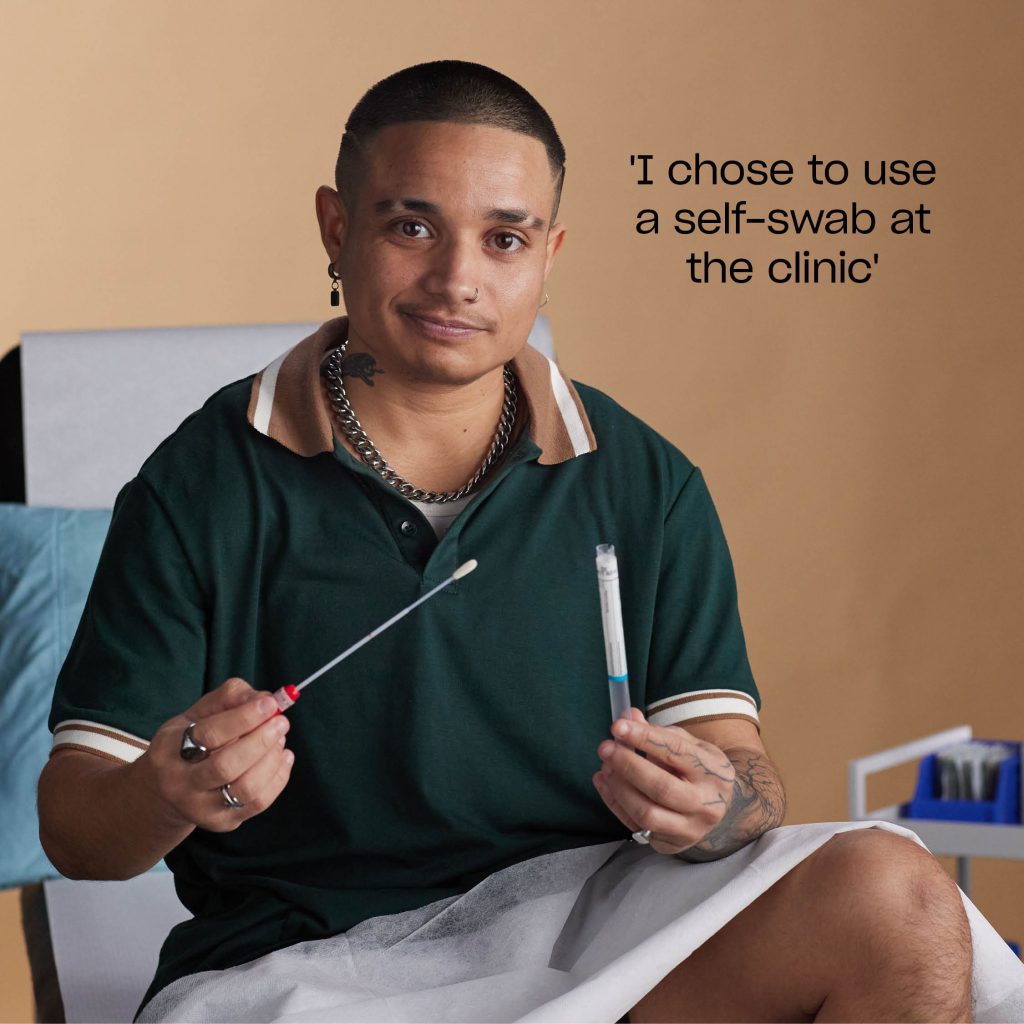
Mathéo is one of the faces of the Own It national cervical screening campaign. Previously, Mathéo avoided getting tested because of trauma from a past experience and was really put off by the speculum.
Mathéo chose to find a doctor he could trust and did a self-collect test at the clinic, as he recognised the importance of cervical screening.

If you have a cervix and have ever had any sexual contact, you should have a Cervical Screening Test every 5 years from age 25 to 74. That includes trans and gender diverse people.
“Screening with someone who understands my experience makes it easier to take care of my health,” says Mathéo. “I feel much better about self-collection, because I’m in control of my own experience.”
“The idea of cervical screening can make many people feel uncomfortable and vulnerable,” says WA Cervical Cancer Prevention Program Manager, Nerida Steel. “This can be compounded for trans and gender diverse people, who face additional barriers due to things like gender dysphoria and discrimination.
“Having control over the process by choosing self-collection can make people feel more comfortable and help alleviate anxiety.”
The self-collection option is safe and just as accurate at detecting the human papillomavirus (HPV) – a common infection and the cause of almost all cervical cancer – as the healthcare-provider collected test. Your GP can provide you with the self-collect swab and instructions on how to do the test.
And just a heads up: being on testosterone doesn’t lower your risk of developing cervical cancer, so don’t skip getting screened.
“It’s your health,” says Mathéo. “It matters.”
This November, there will be two opportunities to learn more about cervical screening at PrideFEST Fairday. The WA Cervical Cancer Prevention Program will be at the Screening Saves Lives stand. ACON will be running a pop-up cervical screening clinic in partnership with SHQ. Eligible attendees will be able to perform the self-swab test on the day!
The Own It campaign is funded by the Australian Government and delivered with partner organisations, including ACON. The campaign encourages Australia’s most under-screened communities, including the LGBTQ+ community, to take charge of their health and say yes to cervical screening on their terms.
You can also find community-specific cervical screening information at: www.ownit.org.au/lgbtq