


Jerome Robbins made his mark in cinema and theatre
Jerome Robbins first developed an interest in dance as a high school student. At university, he enrolled in chemistry but dropped out to pursue his passion for dance.
He joined the company of Senya Gluck Sandor, a leading exponent of expressionistic modern dance. Sandor suggested he change his name from Rabinowitz to Robbins. He also began studying ballet and other dance forms.

Robbins began working as a dancer in revue shows before joining Ballet Theatre, now known as American Ballet Theatre. It was there that he choreographed Fancy Free, a comical ballet about sailors on shore leave.
The work later evolved into the musical On the Town and marked the beginning of Robbins’ Broadway career. The 1944 production combined Robbins’ choreography with music by Leonard Bernstein and a story by Betty Comden and Adolph Green.
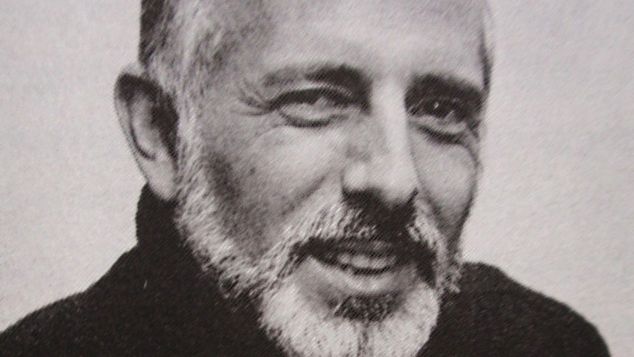
Robbins went on to create several more Broadway musicals, and in 1947 he added another string to his bow when he began studying acting and directing. He was one of the inaugural members of The Actor’s Studio, where his classmates included Marlon Brando, Sidney Lumet and Montgomery Clift.
Throughout the 1940s and 1950s, he continued dividing his time between ballet and Broadway. He worked on productions including The King and I, Peter Pan and The Pajama Game. Further success followed with West Side Story and Gypsy.
In 1958, Robbins established his own small dance company, which made its debut at Gian Carlo Menotti’s Festival of the Two Worlds in Spoleto, Italy.
Robbins was later called before the House Committee on Un-American Activities and asked to identify suspected communist sympathisers. He admitted he had been a member of the Communist Party but initially declined to name others. Later, amid concerns that his homosexuality might be publicly exposed, he provided the committee with names of people he believed to be communists.
Many of those he named struggled to find work after being blacklisted, while Robbins’ own career continued to flourish.
In 1960, West Side Story was adapted for the screen. Robbins was initially hired to direct the film, but because of his limited film experience, Robert Wise was appointed co-director.
The production fell significantly behind schedule and over budget. After 45 days of filming, it was 24 days behind schedule and Robbins was dismissed by the producers.
West Side Story went on to become a major success, winning 11 Academy Awards, including two for Robbins.
He continued to enjoy success on Broadway with Fiddler on the Roof, earning Tony Awards for both direction and choreography. He also worked extensively as a “show doctor”, helping rescue struggling productions. Funny Girl and A Funny Thing Happened on the Way to the Forum are among the best-known examples of shows that benefited from his input.
Robbins was bisexual and is known to have had relationships with several notable figures, including actor Montgomery Clift, ballerina Nora Kaye and dancer Buzz Miller.
During the 1990s, Robbins faced a series of health challenges. A bicycle accident left him incapacitated, and in 1994 he underwent heart valve surgery. In 1996, he began showing signs of Parkinson’s disease.
In 1998, he staged his final work, the ballet Les Noces. Two months later, on 29 July 1998, he died following a stroke.
Broadway theatres dimmed their lights in tribute to his life and work.ghts on Broadway were dimmed for a moment out of respect for his life’s work.