

Members of Perth’s LGBTIQA+ communities and allies gathered at the Northbridge Piazza on Saturday afternoon for a snap protest action in response to the Northern Territory government’s decision to block access to puberty blocker medication for people under the age of eighteen.
The Northern Territory’s Country Liberal Party (CLP) government announced on December 21st that it will withdraw funding for puberty blockers and gender-affirming hormones for people under 18.

Health Minister Steve Edgington said the government was taking a stance against “dangerous ideologically driven practices” within the health system. At today’s protest action in Perth people held up masks of his face mimicking a well-known poster that mocks Russian leader Vladimir Putin’s stance against the LGBTIQA+ communities.
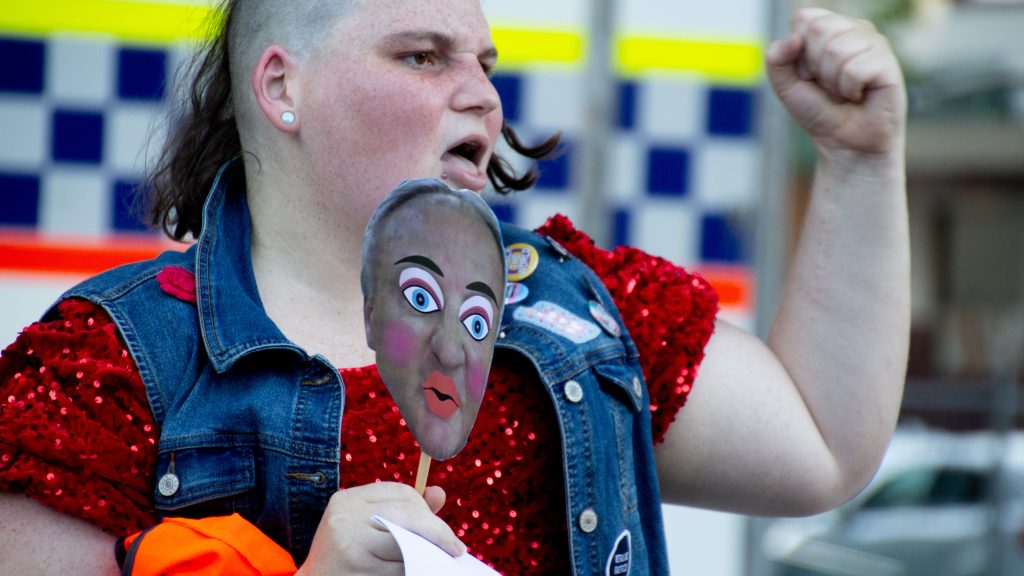
While the WA Police had put a number of restrictions on how the protest could be run, the group of around 60 attendees met peacefully and there were no incidents.
After listening to speeches from a number of features speakers, the group marched from the Northbridge Piazza to Yagan Square where the second half of the event saw an open-mike section allow anyone in the crowd to share their experiences and voice concerns.
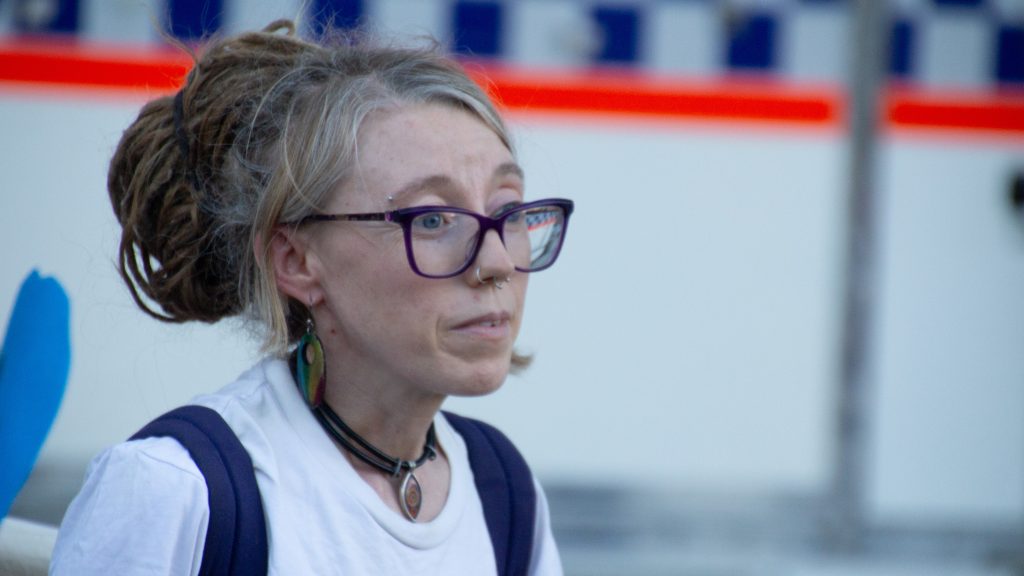
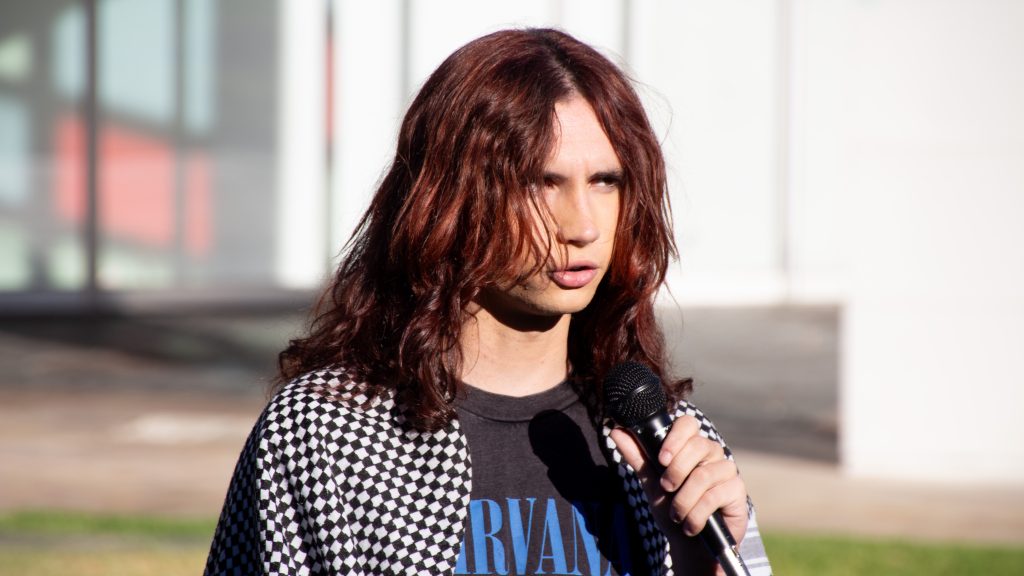
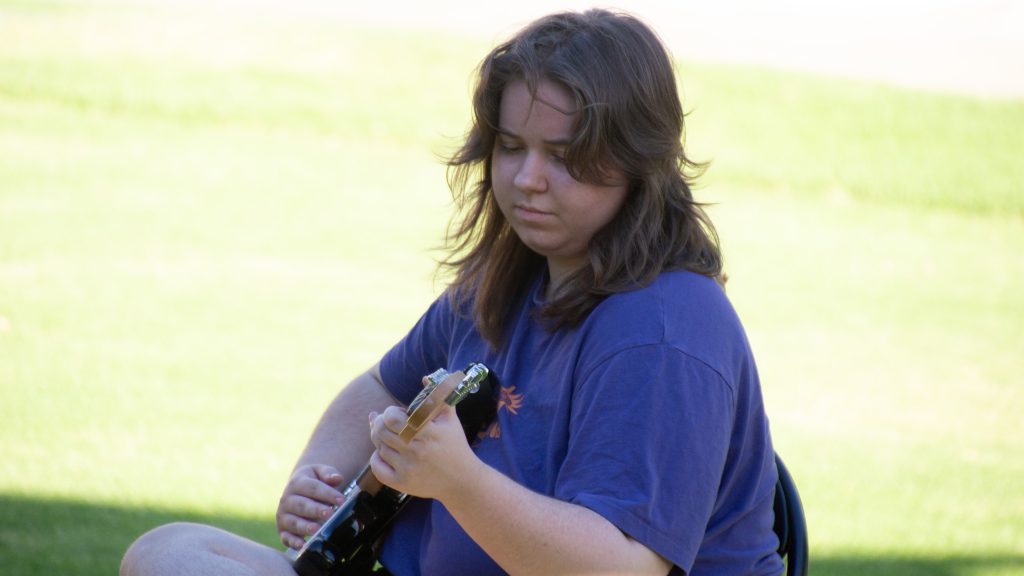
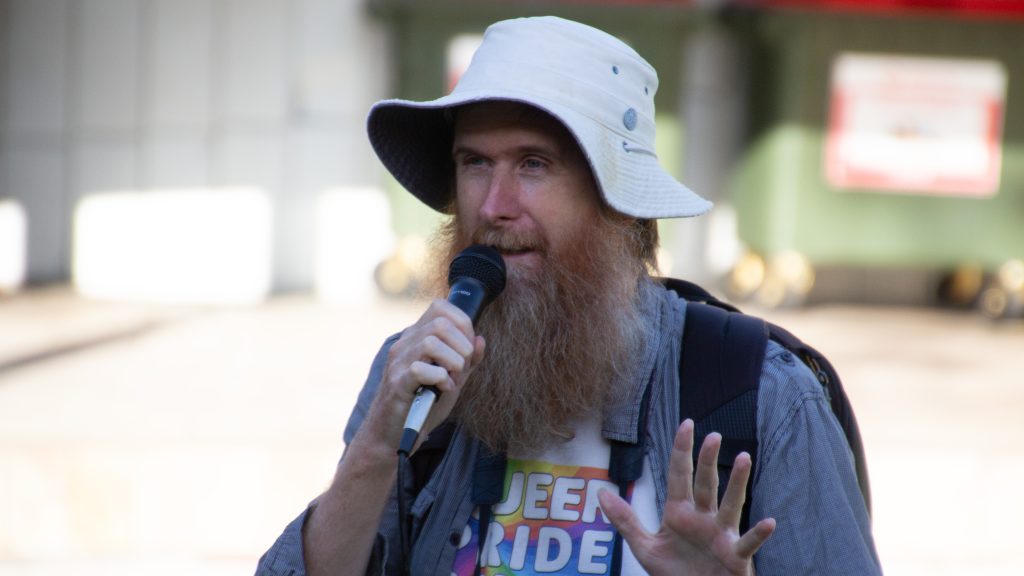
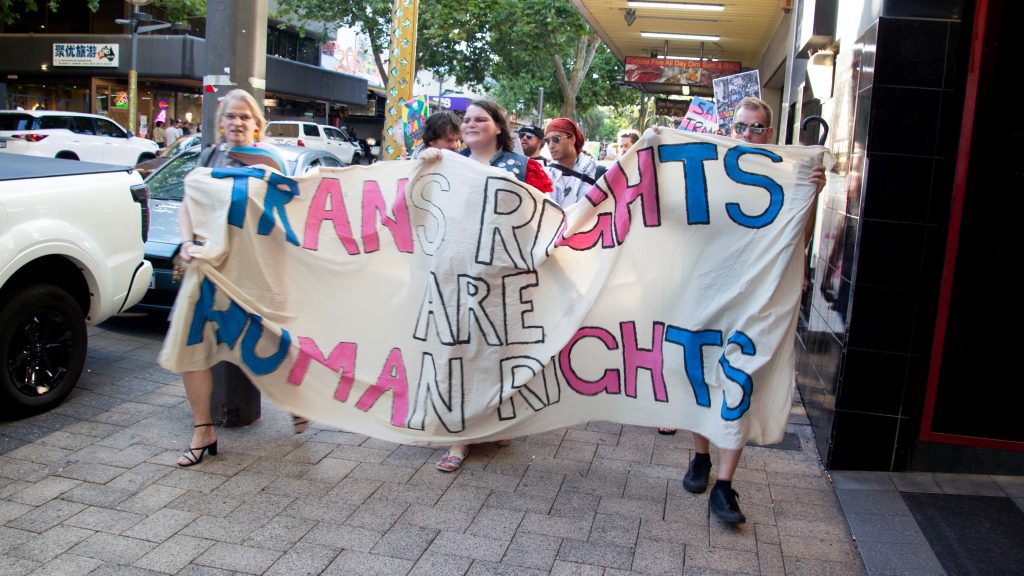
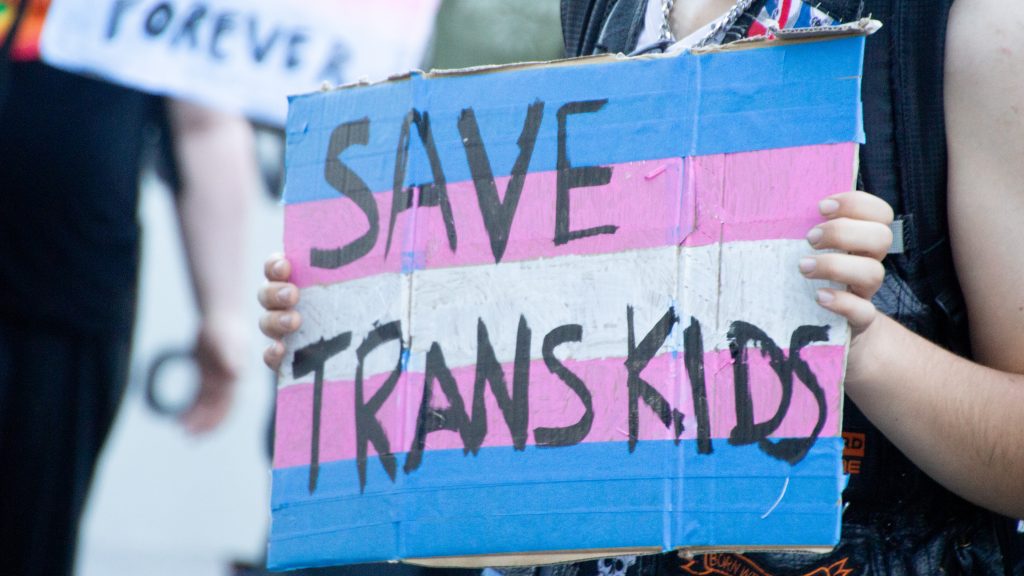
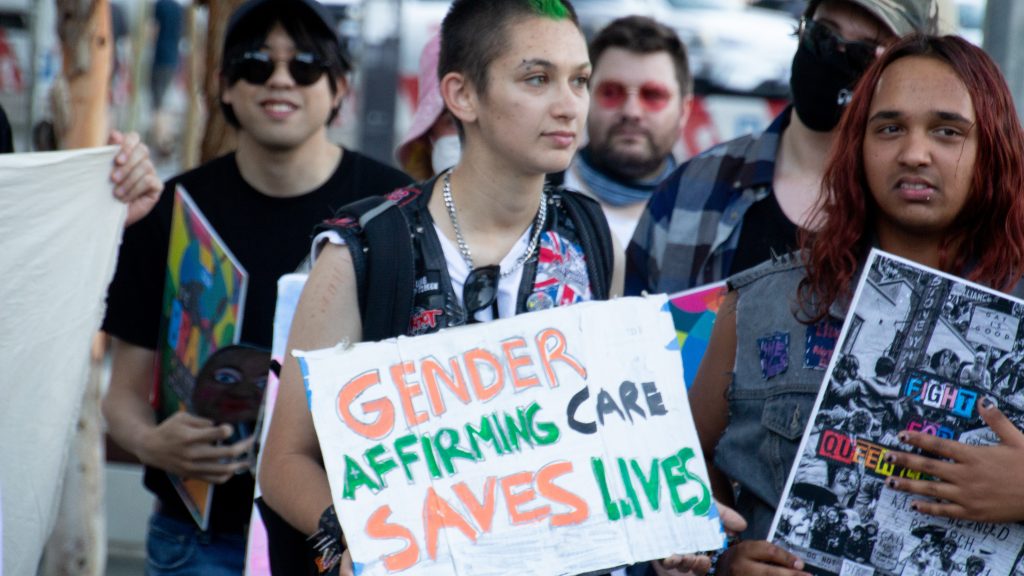
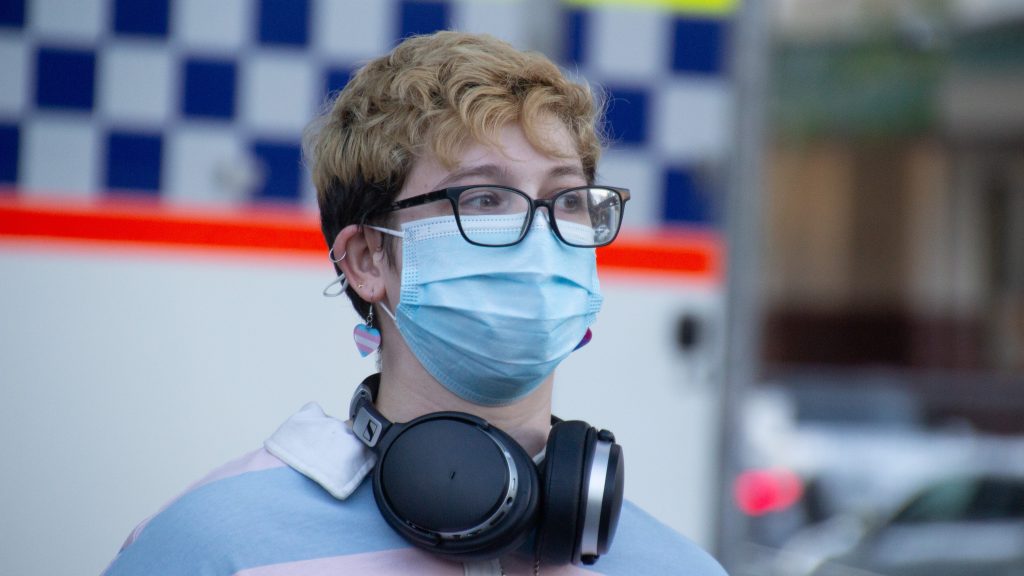
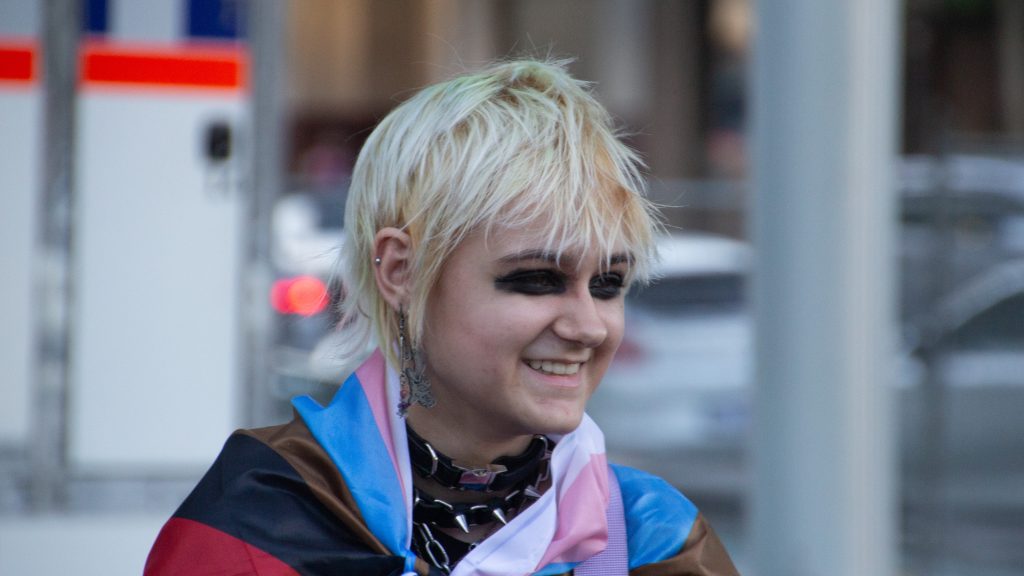
From the scheduled speakers, to the members of the crowd taking to the mike, one concern was clear, the slow erosion of transgender rights is expected to spread to adults medical rights, to wider LGBTIQA+ rights, and women’s health rights.
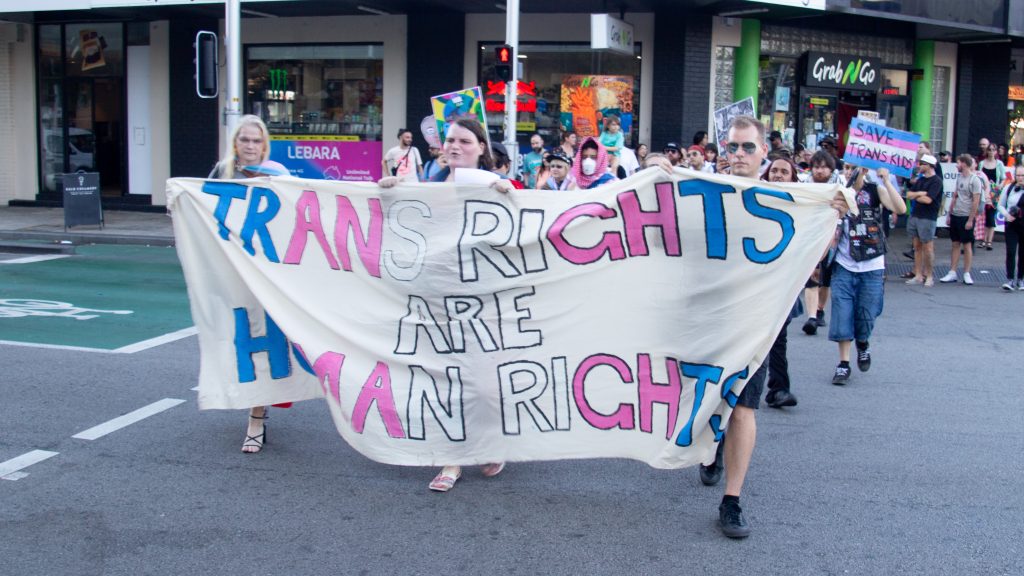
The decision to ban puberty blockers in the Northern Territory follows on from the Queensland government announcing that its ban on the treatment will be extended until at least 2031.
The United Kingdom has also instituted an ban following the Cass Review into gender treatments, however that report has been questioned by international experts. The UK has also recently announced it would be moving ahead with new clinical trials to access the effectiveness of the medication.
New Zealand also recently announced that it would bring in a ban following the lead of the United Kingdom, but the decision has been challenged in the High Court.
Late last year new research published in the Journal of Pediatrics highlighted a significant reduction in mental distress among young people who were able to access gender-affirming treatment.
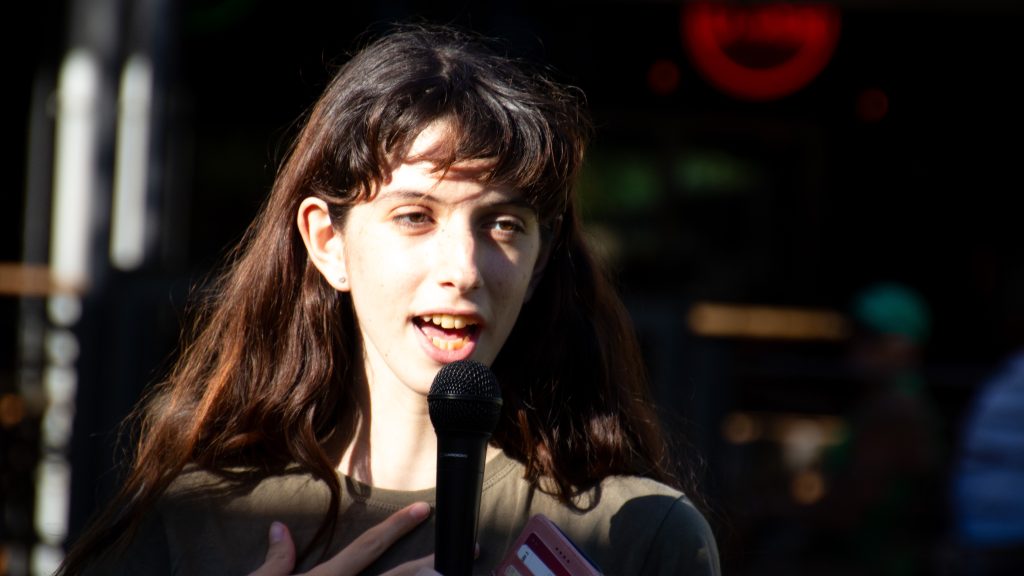
Speaking at today’s rally in Perth, Maddie spoke about the positive experience she’d had as a patient at WA’s Youth Gender Clinic.
“I just want to celebrate every trans person in this country, and in my life, who continues to live openly and fight for the life that we want to live.” she told the crowd.
The activist also highlighted that there had been many political wins for people who are transgender in the last year including the removal of the WA Gender Recognition Board, and a major update to similar laws in New South Wales that abolished a requirement for people to undergo surgery to be able to legally change their gender.
Maddie also noted that when Queensland introduced their ban in early 2025 there was a huge turnout of people to protest the move around the nation, and the results of the 2025 federal election could be interpreted as a rejection of divisive politics that target people who transgender in the culture war.
“I think its worth celebrating, an I think we need to hold on to every little sign that we have the majority on our side.” Maddie said.
Alex Bainbridge, who now lives in Queensland after many years of activism in Western Australia, shared his experience of attending rallies in Queensland and hearing the heartbreaking stories of young people and their families who have been cut off from affirmative care through the government’s ban.
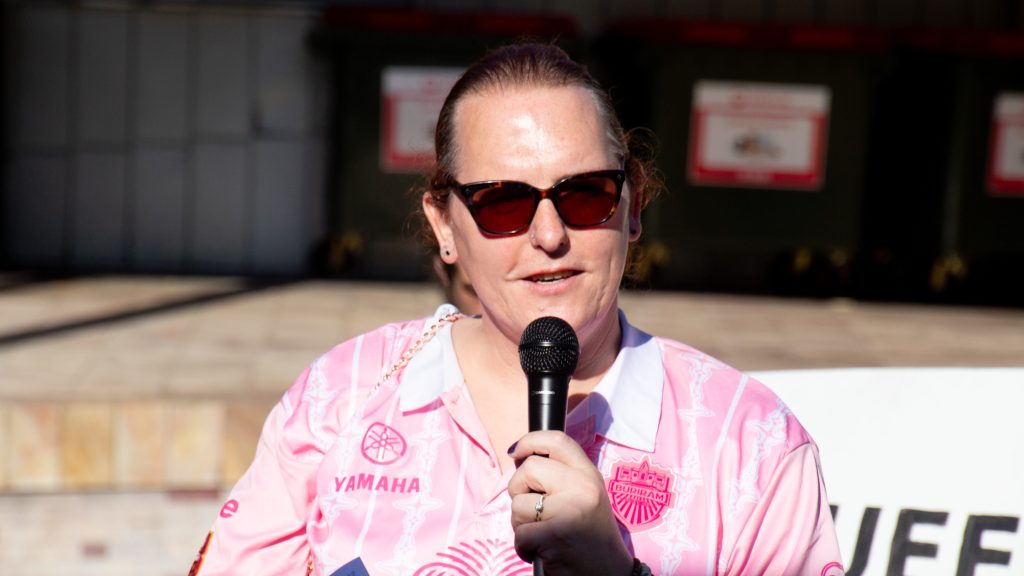
Stacie Mei Laccohee-Duffield from Queer and Diverse Pathways said healthcare bans were discriminatory and impinged on people’s human rights.
“Australia is a signatory of the Universal Declaration of Human Rights, and has made commitments through many international treaties.” Laccohee-Duffield said. “These rights are supposed to protect all of us, every Australian.”
“These are not just words or abstract principles, they are about real lives, real children, real young people – that want to become adults. I have also lived that journey, as somebody who transitioned later in life I went through puberty in a world who refused to see who I was.”
The rights advocate said that while they could look back on their teenage years and understand that there was less awareness about people who are transgender, it is a very different scenario in 2026.
“We have the knowledge, we have the expertise, and we have the words. This is bigotry. This is hate. This is an abuse of power.
“The damage done today cannot be undone. These young people are going to live their whole lives, just as I did.” Laccohee-Duffield said. “When we try to force our young people into neat little boxes, when we refuse to accept the truth of their experience, we don’t just fail them, we harm them.
“We leave them alone with pain and shame that they should never have to carry.”
While puberty blockers are being declared unsafe in the treatment of gender dysphoria, it’s simultaneously being embraced as a treatment in precocious puberty, a move which advocates labeled a clear double standard.
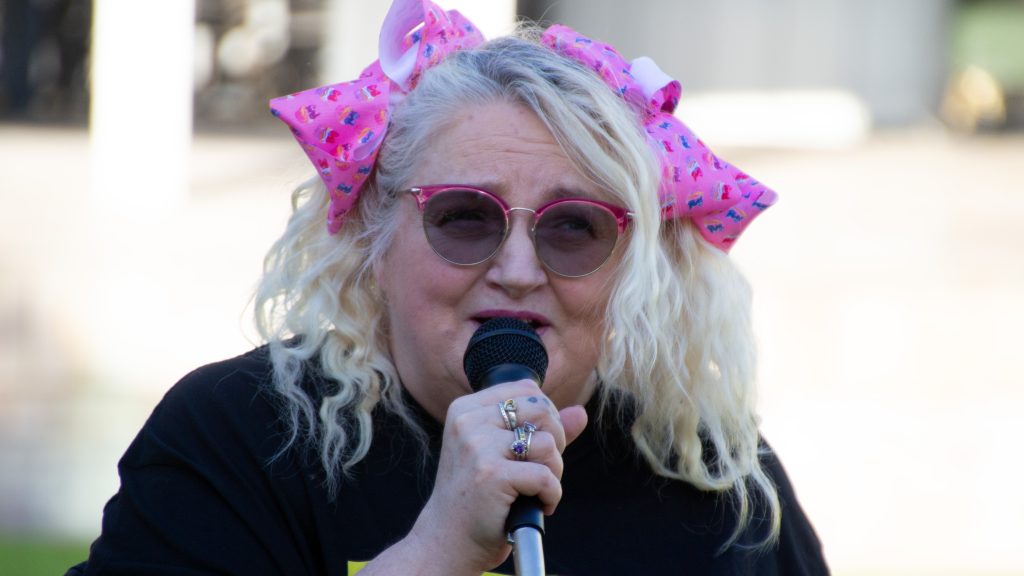
Kate Salinger-Hatter from PFLAG WA said it a welcomed element of the rally that other political struggles were being highlighted, stressing the importance of looking at challenges through an intersectional lens.
“The attack on the bodily autonomy of trans youth is a freeway to attacks on bodily autonomy of women and people who assigned female at birth. It’s not a hard jump, its not a big leap.
“Politicians shouldn’t be making medical decisions. They shouldn’t be making them for our children.” Salinger-Hatter said.
“If we start letting politician make medical decisions abut our bodies, its really only a matter of time until this extends to women’s rights as well. We already lack protections in this state for people who are intersex, especially of infants.”